

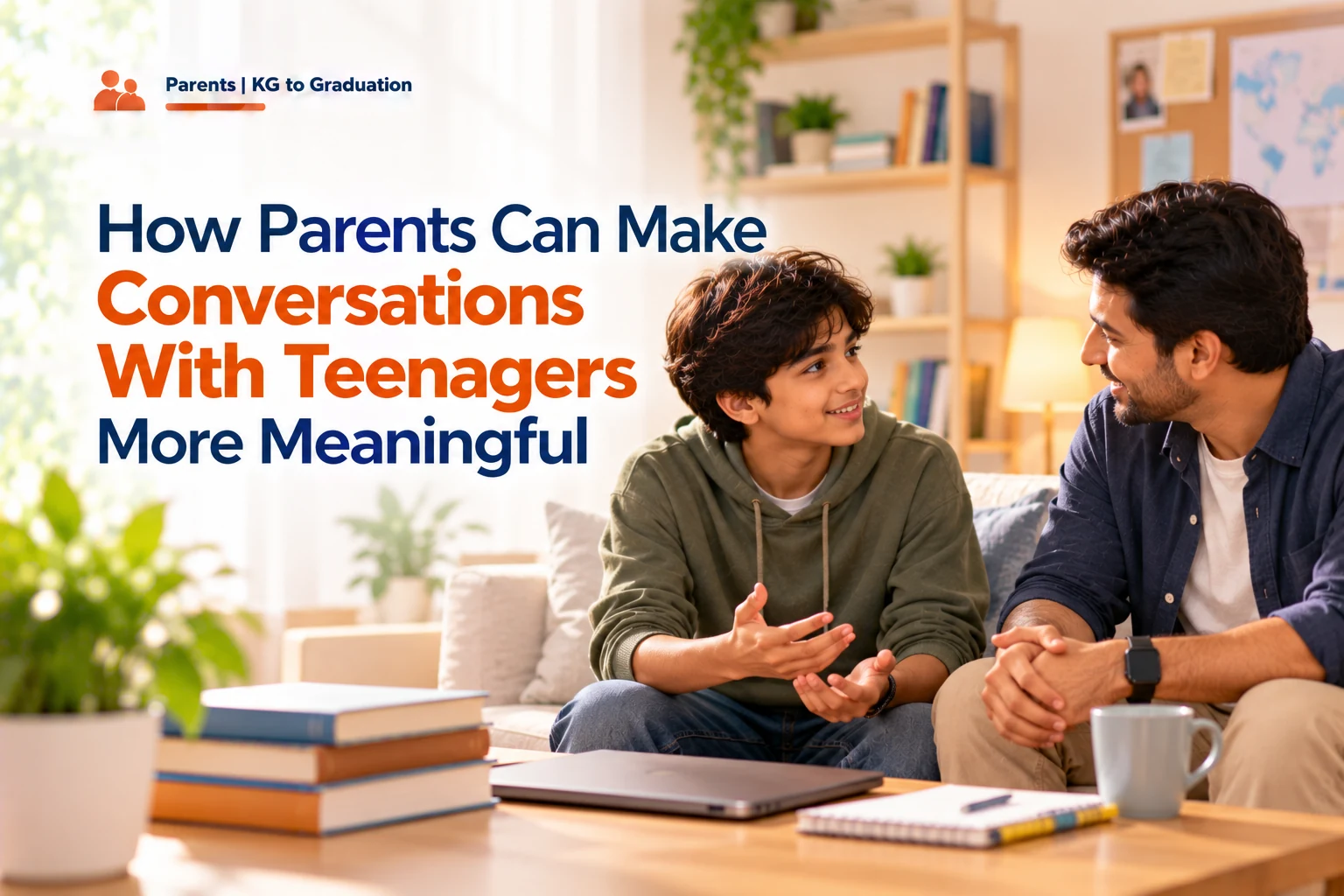
Teenagers may not always say much—but that doesn't mean they don't want to be heard.
As children grow older, conversations can become less about giving instructions and more about understanding their thoughts, experiences and perspectives.
What Changes?
Teenagers are developing their own opinions and becoming more independent.
Instead of every conversation being about:
“Did you finish your homework?”
make space for conversations about:
- What they are interested in
- What they are learning
- Friendships and experiences
- Things they find challenging
- Ideas they disagree with
- What they want to explore
Try Conversation Starters
Sometimes, the right question can make a difference:
“What was the most interesting part of your day?”
“What is something you've been thinking about lately?”
“If you could learn one new skill, what would it be?”
“Is there anything you want my opinion on?”
These questions create opportunities for teenagers to share without feeling interrogated.
Listen More Than You Lecture
Not every conversation needs an immediate lesson.
Try to:
- Let them finish speaking.
- Ask before giving advice.
- Respect differences in opinion.
- Avoid turning every mistake into a lecture.
- Keep the conversation open even when you disagree.
The Bigger Goal
Meaningful conversations help teenagers feel that their thoughts matter.
The aim isn't to know every detail of their life. It's to build a relationship where they feel comfortable coming to you when they need support.
DiscoverU
DiscoverU encourages children and young people to express themselves, reflect on their experiences and develop confidence.
With DiscoverU, children get opportunities to explore their interests, try new experiences and discover what they can do.
Because a strong parent-child relationship grows through connection, conversation and trust.