

After Class 12, students often face many options at once. A pathway plan can help turn those options into a clear sequence of next steps.
Build It in Six Parts
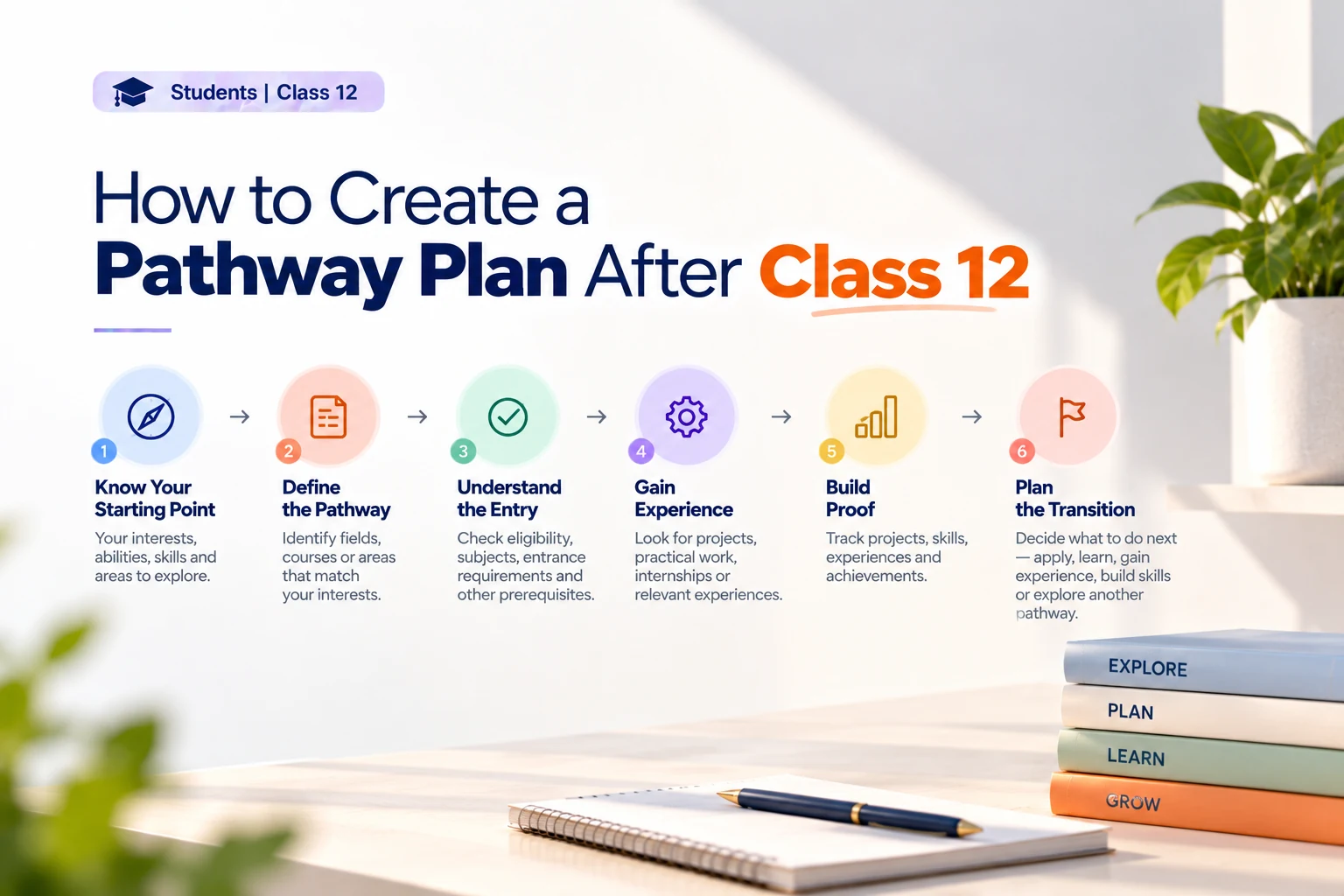
1. Know Your Starting Point
Begin with your interests, abilities, skills and the areas you want to explore further.
2. Define the Pathway
Identify the fields, courses or areas that connect with your current interests and capabilities.
3. Understand the Entry
Check what each pathway requires — eligibility, subjects, entrance requirements and other prerequisites.
4. Gain Experience
Look for opportunities to apply learning through projects, practical work, internships or other relevant experiences.
5. Build Proof
Keep track of projects, skills, experiences and achievements that show what you have actually developed.
6. Plan the Transition
Decide what you need to do next — apply, learn, gain experience, build skills or explore another pathway.
Keep It Flexible
A pathway plan should provide direction, not a permanent prediction. As students gain experience, their interests and capabilities may develop, and their plan can change with them.
Don't try to plan your entire future at once. Build the next step, then use experience to shape what comes after.