

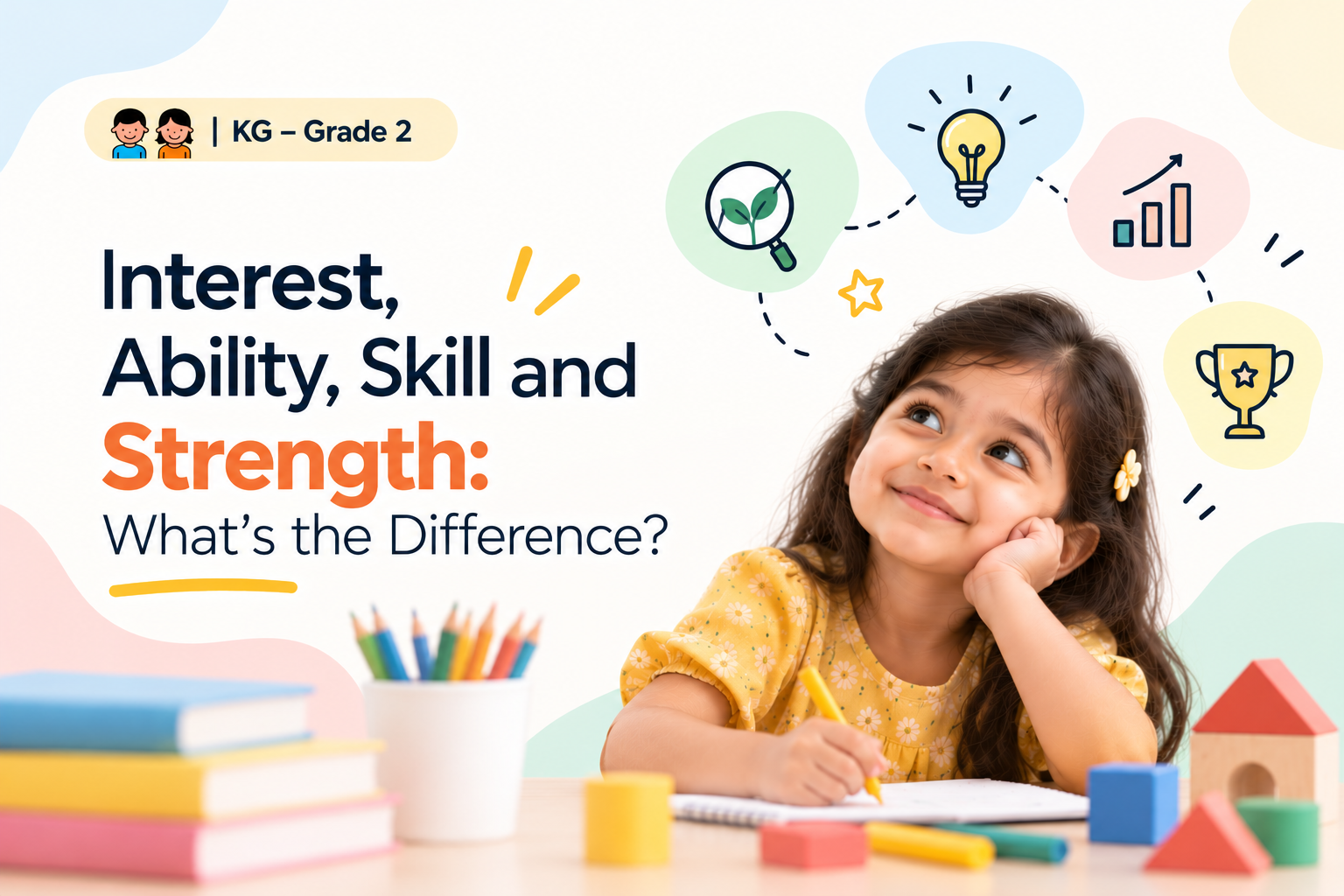
When we talk about a student's development, words like interest, ability, skill and strength are often used as if they mean the same thing. They don't.
Each one tells us something different about the student — and understanding the difference can help us observe development more thoughtfully.
Think of Them as Four Different Signals
INTEREST — “I WANT TO.”
What naturally attracts a student or makes them curious enough to explore further.
ABILITY — “I CAN.”
Something a student may show potential for through the way they think, respond or approach a task.
SKILL — “I CAN DO THIS.”
Something that becomes stronger through learning, practice and repeated experience.
STRENGTH — “THIS IS WHERE I OFTEN DO WELL.”
A developing area that becomes more noticeable through consistent experiences and evidence over time.
They Can Connect — But They Are Not the Same
A student may be highly interested in drawing without yet having strong drawing skills.
Another may have an ability for problem-solving but have little interest in doing it.
Someone may develop a strong communication skill through practice, while another student's strength may emerge through repeated teamwork experiences.
That's why one activity, one test or one result should not be used to define a student.
What Should We Look For?
Instead of asking only:
“What is this student good at?”
It can be more useful to ask:
- What are they interested in?
- What abilities are beginning to emerge?
- Which skills are developing through practice?
- What strengths appear repeatedly across experiences?
Over time, these different signals can help create a broader picture of the student without forcing them into a fixed label.
The Bigger Idea
Interest can invite exploration.
Ability can reveal possibility.
Skill can grow through practice.
Strength can emerge through repeated evidence.
Understanding the difference gives students more room to discover, develop and explore what comes next.